
Neurodiversity Affirming (Un)Conference
Taking conferences & professional learning out of the box.
Lived-experience led learning that will change how you support and understand neurodivergent children.
Online – Around the World
2026 Event – August 19th & 20th
Stay tuned for 2027 dates!

The (Un)Conference Professional Learning unlike anything else!
It’s for Professionals Who Support Neurodivergent Children
Allied health, teachers, educators and medical professionals.
Wherever you are in the world, if your work touches the lives of neurodivergent children, this event is for you.
Get event updates! Neurodiversity Affirming (Un)Conference will be running again in 2027!
Pop your details below and I’ll keep you in the loop.
Speakers & Facilitators
The line-up for the Neurodiversity Affirming (Un)Conference is taking shape! More speakers added soon, check back regularly!
Day 1 – The Conference
Wed 19th Aug + recorded
These sessions are available for immediate access! 3 months’ to watch
Sonny Jane Wise
they/them

Sonny Jane Wise, the Lived Experience Educator, is a fiercely authentic neurodivergent, queer and disabled keynote speaker, author and educator. They unapologetically push the neurodivergence conversation past autism and ADHD into Mad Pride, disability justice, and challenging neuronormativity from every angle.
Presentation
Difference or Disorder? From the Pathology Paradigm to the Neurodiversity Paradigm
Sonny opens the conference by asking whose difference and distress get treated as problems to fix. The lens goes beyond just Autism and ADHD, drawing in Mad Pride and the Hearing Voices Movement. The aim: affirm the whole of a child, not just the parts that fit a diagnosis.
Hibak Hassan
she/her

Hibak Hassan is a late-identified AuDHD occupational therapist and autism assessor whose practice, Haven Hues, was born from the gaps she kept seeing in traditional care, and exists to celebrate the full spectrum and hues of neurodivergent ways of being.
PRESENTATION
Autistic Burnout: A Proactive Approach
An OT's reframe that moves sensory strategies and special interests out of reactive burnout recovery and into everyday protective practice, exploring how sensory supports, meaningful occupations and special interests guard against autistic burnout across the lifespan.
Kelsie "Mick" Olds
they/them

Kelsie "Mick" Olds is The Occuplaytional Therapist, an autistic occupational therapist and parent who champions play and the radical idea that children deserve to be respected.
Presentation
Power, Play & PDA
How Child-Led Play Empowers Children with a PDA Profile
Kaishawna Fleming
they/them

Kaishawna Fleming is an African American, Black DeafBlind Autistic disability-rights advocate, clarinettist and composer who communicates through AAC, sign language and sometimes speech. They are studying to become a teacher and they help disabled and non-disabled people to understand the cultural nuances of disability.
PRESENTATION
Supporting AAC Users & Understanding Cultural Differences
Kaishawna explores unreliable speech and AAC, alongside the cultural and racial biases that affect whose communication and support needs are understood. The session focuses on what professionals need to know to better support AAC users, especially Black and Brown AAC users.
Erin Tee
she/they

Erin Tee is an AuDHD educator, parent, and coach with a Master's in Cognitive Diversity in Education. She helps professionals support neurodivergent children through practical, brain-friendly strategies that reduce friction and build understanding.
PRESENTATION
Fluctuating Capacity
Why can someone do something one day and not the next? Explore why a child who could do it yesterday may not be able to access that same skill today, how fluctuating capacity can affect behaviour and performance, and how to respond with flexible expectations and practical scripts for professionals and families.
Panel
Supporting Trans and Gender Diverse Neurodivergent Young People
A panel on supporting trans and gender diverse neurodivergent young people in ways that are affirming, safe and genuinely inclusive, centring lived experience and the voices too often left out.

Chair
Lumen Gorrie
they/them
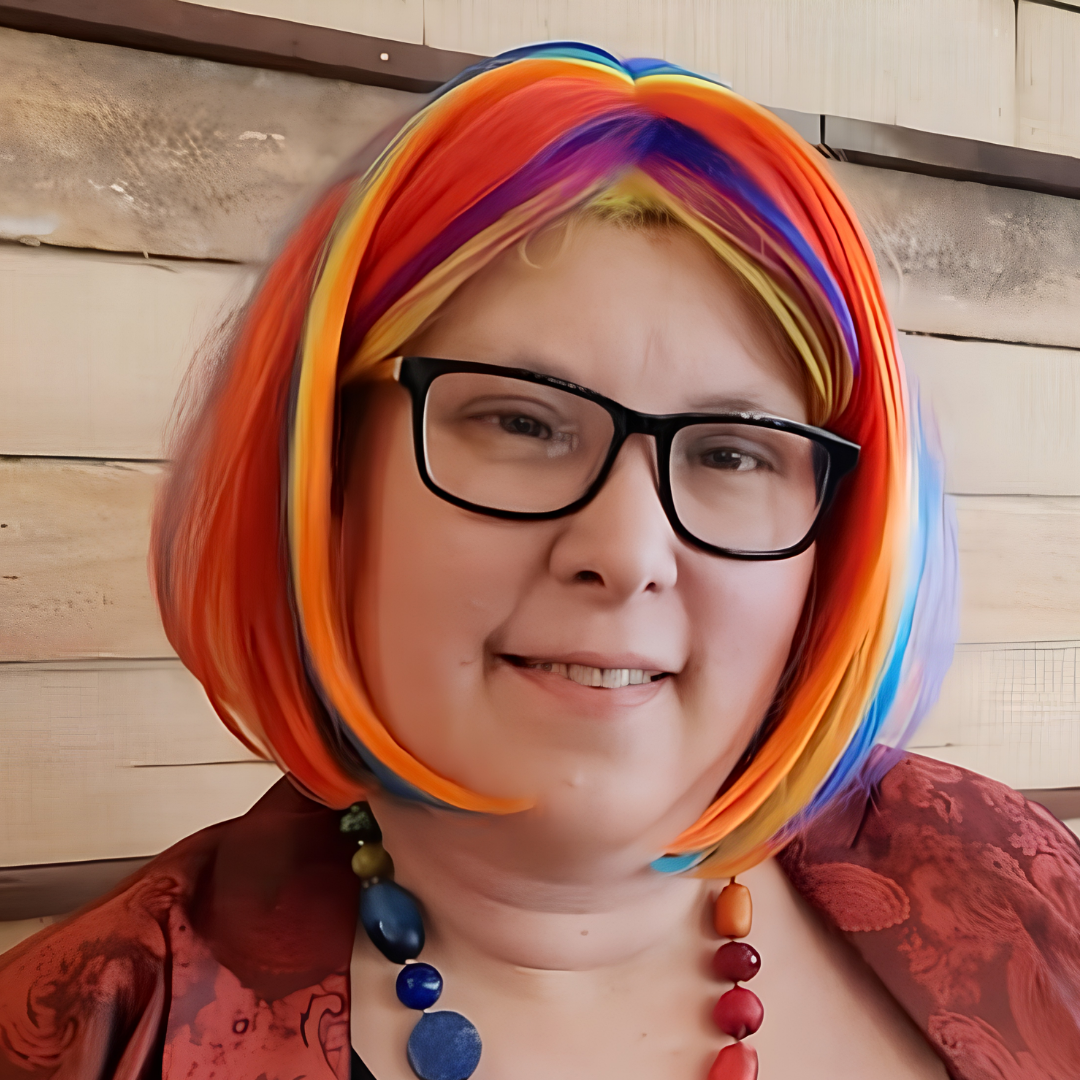
Lumen Gorrie is an AuDHD+, queer (aro-ace), trans, chronically ill, disabled clinical psychologist, supervisor, educator, and advocate, living and working on unceded Wurundjeri land. Their work focusses on supporting folks who hold multiple intersecting identities, alongside those navigating eating disorders, differences, and difficultes, from an anti-colonial, depathologising, deshaming, anti-oppressive framework.
Panellist
Yenn Purkis
they / them
Yenn Purkis is a non-binary, autistic and ADHD author of eighteen books and a fierce autism advocate of two decades, speaking openly about neurodivergence, gender and mental health.

Panellist
Lorena Slade
she/her
Lorena Slade is a neurodivergent, trans, lesbian, Mumma bear, and a molwa winyarr (white woman) living on unceded Yorta Yorta woka and bala (land and water). She is a Social Worker with over 15 years experience as a therapist, a mother of 2 neurodivergent children, an astrologer, and is proud to create spaces for people that challenge ableism, trans-misogyny and other forms of oppression.

Panellist
Hayden Moon
he/they
Hayden Moon is an award winning performer, academic and advocate for the LGBTQIA+, disabled and First Nations communities. They are studying a PhD in Theatre and Performance Studies and is a casual Indigenous Studies academic at UNSW. Hayden is autistic and legally blind and in 2024 he was an official Ambassador for the UN International Day of People with Disability. Hayden loves the stage and being with his communities, and hopes to inspire LGBTQIA+, disabled and Indigenous youth to be proud of their identities.
Panel
What families actually want from professionals
Laetitia, who led Understanding Zoe's study of 1,091 Australian families, Making the Invisible Visible, convenes a live panel putting the voices of neurodivergent families in front of you, often the same neurodivergent parents you work with. Hear, in their own words, what they most want from professionals, and the small changes that would make the biggest difference.

Chair
Laetitia Andrac
she/her
Laetitia Andrac is an autistic, ADHD and PDA founder behind Understanding Zoe, a neurodivergent mother and researcher who left senior strategy roles to build a platform with and for neurodivergent families, and who shows up unmasked on purpose.

Panellist
Michael Coles
he/him
Michael Coles is an Autistic and ADHD neurodiversity speaker and host of The Deep Dive Podcast, who speaks about autistic burnout, parenting neurodivergent children, and more.

Panellist
Jessica Otter
she/her
Jessica Otter is an autistic mum of two and business owner behind Aussie Autism Family and Social Spoons, who has turned the loud, unfiltered reality of raising her autistic son into a community thousands of families lean on.

Panellist
Sharen Lui
she/her
Sharen Lui is a neurodivergent Clinical and Developmental Psychologist, a Chinese-speaking parent, and the founder of Sprout Psychology Melbourne. Bridging the gap between multicultural families and professionals through neurodiversity-affirming practice, cultural humility, and reflexivity, she aims to foster a deeper understanding of neurodivergence across generations, languages, and cultures.
Day 2 – The Unconference
Thu 20th Aug, Live Only
These sessions were not recorded. Join us in 2027 to experience the full event!
Stephanie Robertson
she/they

Stephanie Robertson is a multiply neurodivergent occupational therapist, speaker and founder of SGR Occupational Therapy, a self-confessed fair-dinkum weirdo who fuses lived experience and spirituality to depathologise what it means to be human.
Workshop
Autistic joy
An experiential, reflective session where practitioners reconnect with their own joy and play, then turn that back to making space for Autistic children's joy in everyday practice.
Christina Schmidt
she/her/hers

Christina Schmidt is a Black, multicultural AuDHD speech pathologist and founder of Free to Be Me Speech Therapy, working at the intersection of neurodiversity, race and identity, the kind of person who lights up a room, holds it with heart and shifts how people think.
Experiential session
The House We Were Trained In
A gentle, creative session where practitioners map the professional "house" they were trained inside, then explore renovating rather than demolishing it, holding how power, privilege and intersectionality run through its walls, and leave ready to meet neurodivergent children with renewed wonder and humility.
Allison Davies
she/her

Allison Davies is an AuDHD speaker, songstress and former music therapist who helps people reclaim their voice and reach for regulation, treating music as the mother tongue of the brain.
Experiential session
A Gathering of Voices
A non performance singing session, simple and repetitive by nature, where voices come together and practitioners feel for themselves how melody, rhythm, breath and group singing regulate the brain and soothe the body, the very thing they can carry back to the children they support.
Sarah Middleton
she/her

Sarah Middleton is a neurodivergent social worker, educator and systems thinker behind Brilliant Little Gems, a warm, coffee-fuelled parent of neurodivergent kids who traded the classroom for social work and now helps families and practitioners understand the cost of compliance from the inside.
Workshop
Supporting PDA through the nervous system
A hands-on toolkit for supporting PDA (Persistent Drive for Autonomy... a.k.a Pathological Demand Avoidance) at school, where a child's demand-avoidance and distress are understood as nervous system states, not behaviour to manage or compliance to enforce.
You'll get full permission to feel how you are feeling, show up with the nervous system you have in any given moment, and utilise this as a tool for connection and support with all children.
Chenai Mupotsa-Russell
she/her

Chenai Mupotsa-Russell is a neurodivergent Developmental Educator, art therapist and founder of Rainbow Muse Collective. And the most delightfully colourful human you’ll ever see. Chenai is a PhD researcher in Community Psychology whose liberatory, intersectional practice meets children at the crossroads of disability, race, migration, gender, and neurodivergence, challenging systems of compliance while nurturing connection, creativity, and belonging.
Experiential session
The Sticker Chart Industrial Complex: Beyond Compliance and Towards Belonging
An experiential session using collaborative art-making, storytelling, movement, and reflection to explore compliance, masking, and nervous system safety. Together we’ll question what happens when “good behaviour” becomes more important than genuine wellbeing, and imagine neurodiversity-affirming spaces grounded in dignity, participation, and belonging. Bring your markers!
Get event updates!
Pop your details below and I’ll keep you in the loop.
Pricing
Missed the live (Un)Conference?
Day 1 Recordings
Includes:
- Recordings of every Day 1 session from the 2026 Neurodiversity Affirming (Un)Conference
- Day 1 recordings, available from 24 August 2026, for 3 months.
- Access for 1 participant.
Accessible pricing
We never want cost to be the reason you can't join. A reduced rate is available for anyone who'd find the full price a barrier, including neurodivergent, disabled and chronically ill folks, First Nations people, students and new graduates. Email unconference@playlearnchat.com for more info.
Values behind the (Un)Conference
These are the values that underpin the Neurodiversity Affirming (Un)Conference – how it is created, curated and experienced.
Neurodiversity affirming
We start from the belief that neurodivergent people are already whole and already worthy, not something to fix.
Lived experience
This event is led by neurodivergent people, so the learning comes from living it, not just studying it.
Diversity
The line-up centres the voices too often left out, chosen for what they have to share, not how well-known they are.
Accessibility
Access and support are planned for from the start. We’ll do what I can to meet speakers and attendees access needs and preferences, and We’ll be honest about what’s possible.
Safety, understanding and connection
We all agree to help keep this a safe, respectful space, speakers, participants and me alike. If anyone causes harm, my team will step in, which may include asking someone to leave.
Why this event is different
This isn’t your typical professional learning event. Most training about supporting neurodivergent children is delivered in very neurotypical, rigid ways: passively watching one person up on a podium. I wanted to create something that does it differently.
The whole event is designed so you experience different ways of learning, thinking and connecting for yourself, not just hear someone describe them.
The line-up centres lived experience and a wide range of voices, including many who are too often left out of mainstream professional learning spaces. Speakers and facilitators are chosen for what they have to share, not how well-known they are.
It all links back to one goal: improving life for neurodivergent children by changing the knowledge, skills and perspectives of the adults around them.
Accessibility
Accessibility is a big part of how this event is designed, from the start and at every stage.
Here’s what that looks like in practice:
- Live auto-captions (by Zoom) on every session. Transcripts of the Day 1 sessions are available after the event, on request.
- Day 1 is recorded, so you can revisit it and learn at your own pace. Captions will be available on the recordings.
- Breaks are planned into both days, with pacing that takes sensory load, focus and recovery into account.
- Content warnings are published for each session, so you can choose what to join and when to step away.
- You can take part in whatever way works for you. Stim, move around, fidget, knit, lie down, eat, step out and come back whenever you need to. No explaining, no asking.
- On Day 1, attendees aren’t seen or heard. You can type in the chat if you want to, or just watch and listen.
- On Day 2, having your camera on is welcome and always optional. Typing in the chat and speaking out loud both count.
- The live sessions run on Zoom, which supports screen readers and keyboard navigation.
- You’ll get a pre-event guide so you know what to expect before the event.
- Reduced-rate tickets are available, so cost is less of a barrier.
- Clear terms and conditions set out how we keep this a safe and respectful space for everyone.
Access needs and preferences are personal, so if there’s something that would help you take part, please tell me. I’ll do what I can, and I’ll always be honest about what’s possible.
FAQs
Who is this event for?
Professionals who support neurodivergent children, worldwide. Mostly allied health and education professionals, though medical professionals and anyone else who supports children is very welcome too.
Are parents and carers welcome too?
Yes, you’re welcome. The sessions are designed for professionals who support neurodivergent children, so the learning is pitched at that level, but if you’re a parent or carer who’d find it valuable, we’d love to have you join us.
When is it?
Wednesday 19th and Thursday 20th August 2026. Both days run from 9:30am to 3:00pm Sydney time (AEST).
What time is that in my time zone?
Our sessions run on Sydney time (AEST). Our sessions run on Sydney time (AEST). Since you might be joining from anywhere in the world, you can check when Day 1 starts in your own time zone.
If the live times are tricky for your part of the world, Day 1 is recorded, so you can watch the Conference sessions later in your own time.
Where is it?
Online, using Zoom Events. Zoom Events is Zoom’s platform made for online events, giving us a single hub for the live sessions with a lobby and space to connect, so you can join from anywhere in the world. You’ll get your access details after you register.
What’s the difference between Day 1 and Day 2?
Day 1, the Conference, leans towards speakers sharing knowledge and lived experience, with attendees joining in via chat.
Day 2, the Unconference, is participatory and experiential: workshops, mentor-led conversations and peer-sharing where you take part rather than just watch.
Will it be recorded?
Day 1 is recorded and made available to registered attendees for 3 months after the event. Day 2 isn’t recorded, so you’ll want to join that day live.
What if I can’t attend live?
Day 1 recording-only access is available, so you can still watch the Conference sessions after the event in your own time. Recordings will be released on Monday 24th August and available for 3 months.
That said, Day 2, the Unconference, isn’t recorded, and the richest learning and connection happen live, so do join us in real time if you possibly can.
How do I join, and what do I need?
Once you register, I’ll send your access details for Zoom Events, including how to join each day. You just need a device with an internet connection and the Zoom app, plus somewhere comfortable to settle in. I’ll share simple joining instructions before the event, so you know exactly what to expect.
Is there accessible or reduced-price pricing?
Yes. A reduced rate is available for people who’d find the full price a barrier, including neurodivergent, disabled and chronically ill folks, students and new graduates, and First Nations people. You’ll be able to apply it as a discount code at checkout.
Can my team or organisation attend together?
Yes, and I’d love to help you bring your team. Groups of 5 or more save 40% off the full-price ticket, so if you’d like to register a few people together, email me at unconference@playlearnchat.com and I’ll get you sorted.
Will I get a certificate or CPD hours?
Yes. After the event, you’ll receive a certificate of attendance showing the hours you complete, whether you join live or watch the Day 1 recording. Both live attendance and watching the recording count towards your certificate. Most professionals can use this towards their CPD or professional development requirements. (Only Day 1 is recorded; Day 2 is live only).
Get event updates! Neurodiversity Affirming (Un)Conference will be running again in 2027!
Pop your details below and I’ll keep you in the loop.
The Neurodiversity Affirming (Un)Conference is hosted and presented by Adina Levy from Play. Learn. Chat.
Contact
For any Neurodiversity Affirming (Un)Conference enquiries, contact unconference@playlearnchat.com